| |  |
Welcome to the CREATIC ATMP newsletter | |
| | | | Welcome to the seventh edition of the CREATIC ATMP newsletter. This newsletter gives you a window to the rapidly evolving regulatory and ethical landscape for therapies utilizing genes-, cells and tissue. You will find a collection of news on regulatory developments and discussions spiced up with perspectives and analysis – all with a focus on social, legal and ethical issues.
The newsletter is published quarterly, with the next issue being scheduled for August. If you're interested in staying updated on the latest social, legal and ethical
news related to ATMPs, please sign up here. | | | | |
 |
|
| | | | |
| | | |  | | | | In this edition of the newsletter you can find:
- Monthly opinion
- The latest ATMP news
- Upcoming events
- Patient Perspective on ATMPs
- Research papers
- CREATIC news
| | | | | | | |
|
|
| | | | |
| .png) |
Who Gets to Decide? Normative
Judgements in Health Technology Assessment
| |
| | | | By Zainab Afshan Sheikh, Assistant Professor, CeBIL and Jakob Wested, Associate professor of Pharmaceutical law, CeBIL
| | | | |
| | | | There
are growing tensions and debates around evidence, uncertainty and the authority
in healthcare prioritization relating to ATMPs and other innovative therapies. While
discussions initially focused on whether such therapies should be accepted on
the basis of more uncertain evidence, the debate has increasingly expanded into
broader questions about the mandate, transparency and democratic basis of health
technology assessment (HTA) systems.
| | | | |
| | | | The
Danish HTA system and its basis
A
dive into the Danish HTA system and recent discussions in Denmark illustrates
the tensions. Denmark's national HTA body for hospital medicines, the Danish
Medicines Council, is a collaboration between the five Danish Regions
responsible for operating Danish public hospitals. The collaboration operates
within a politically agreed framework of seven prioritization principles for
hospital medicines. These principles include considerations concerning clinical
benefit, severity of disease, evidence quality and uncertainty, proportionality
between treatment value and costs, equal access, transparency, and responsible
use of healthcare resources.
The
content of these principles is broadly similar to those guiding HTA boards in,
for example, Sweden and the Netherlands, encompassing both health-economic
concepts — such as cost-benefit analysis — and references to more politically
charged values, such as equality and responsible use of
resources. This contrasts with, for example, the German HTA system, where the
principles governing HTA stick to health-economic criteria, while omitting
references to equality and responsibility. However, the Danish model diverges
from all of these countries in its legal basis. Contrary to its European
brothers and sisters, the Danish HTA body and the principles under which it
operates are established by a political agreement and not by law.
Normative
judgements in HTA decisions
While
discussions initially focused on whether therapies, such as ATMPs, should be
accepted on the basis of more uncertain evidence, the debate has increasingly
evolved into broader questions on legitimacy in HTA decision-making. This
debate has emerged in the context of discussions about access to innovative and
high-cost therapies, including treatments where long-term evidence remains
limited and traditional evidentiary standards are difficult to satisfy. In
public discussions, commentators and members of the Danish Medicines Council
acknowledge that many decisions involve ethical and normative judgements that
cannot be reduced to purely technical evidence and financial assessment.
Recently, the president of a Danish patient association stated that the Danish Medicines
Council's assessments involve ethical and normative judgements that extend
beyond purely technical evaluation. He further argued that, given the Council's
limited representativeness and vaguely defined mandate, this raises questions
about the democratic basis of such decisions.
Ethics
and Uncertainty
What
makes the Danish debate particularly interesting in a broader European context
is that it illustrates how evidentiary uncertainty does not simply create a
need for new forms of evidence, including surrogate endpoints, real-world
evidence, adaptive evidence generation and patient-reported outcomes.
Uncertainty may also expand the space for normative judgements — judgements that
are always embedded in decisions — about acceptable risk, unmet need, fairness
and access. This is especially visible in discussions concerning therapies
where overall survival data may take years to establish. In such situations,
HTA bodies must decide how much weight to give surrogate endpoints, how much
uncertainty is acceptable, and whether the potential benefits of early access
justify the risks of acting on incomplete evidence. These are not merely
methodological questions. They are also political and ethical questions
concerning how societies prioritize scarce healthcare resources and who has the
mandate to make such decisions. When evidence is uncertain and decisions
involve balancing competing values — such as severity, rarity, cost, quality of
life and unmet need — expert assessment inevitably becomes intertwined with
normative prioritization.
A
starting point for understanding HTA assessments for ATMPs
Across
Europe, regulators have increasingly embraced adaptive approaches to evidence
generation, uncertainty management and risk-sharing. However, HTA systems often
remain anchored in more traditional hierarchies of evidence and more rigid
expectations concerning certainty and demonstrated value. This raises important
empirical and conceptual questions that deserve closer attention. How are
judgements about uncertainty, severity and unmet need articulated and
justified? What forms of expertise are considered legitimate in these
deliberations? And how do patients, clinicians, economists and regulators
differently understand the role of evidence in patient access decisions?
HTA
is, fundamentally, a process of prioritization. Its recommendations or
decisions will therefore never satisfy everyone: patients, clinicians, industry
and decision-makers all have something significant at stake, and every decision
will leave someone disappointed. If such agreement were anywhere within reach,
a prioritization board would not be needed in the first place. This makes it
important to examine how prioritization is structured and justified in
practice. The legal basis, the content of prioritization principles, and the
composition of the competent body are key parameters for analyzing how HTA
systems manage uncertainty, value judgements and accountability in decisions on
recommending use of ATMPs.
| | | | |
| | | | Views and opinions expressed are however those of the author(s) only and do not necessarily reflect those of the European Union or European Research Executive Agency. Neither the European Union nor the granting authority can be held responsible for them. | | | | | | | |
|
|
| | | | |
|  | | | | This section delves into the latest news within the ATMP area, with a special focus on Social Science and Humanities (SSH) including legal and regulatory news. | | | | |
|
|
| | | | |
| | | | .png) | The conundrum of Europe's East–West healthcare divide | | | | |
| Patients in Central and Eastern Europe (CEE) have for many years faced
an uneven playing field when it comes to access to medicines. While some
countries in the region have made progress in increasing healthcare investment
and modernising their systems, significant disparities in access to innovative
treatments persist. Addressing these gaps requires sustained attention. These challenges are explored in a new study commissioned by EFPIA, "Healthcare investment and outcomes in
central and eastern europe".
The study highlights that access to innovation across Europe remains a
geographical lottery. On average, some patients wait up to ten times longer
than others to access new medicines. Between 2020 and 2023,
patients in CEE on average gained reimbursed access to only 31% of new
EMA-authorized medicines, compared with 76% in the EU4 (Germany, France,
Italy, and Spain). The average time from EMA authorization to
reimbursement was 705 days in CEE – 260 days longer than the EU4 average of 445
days.
These findings are reinforced by the latest data from EFPIA's 2024
Patients W.A.I.T. Indicator, which shows shift in access
to medicines for millions of Europeans. The Patients W.A.I.T. Indicator shows
persistent, significant variation in access to new medicines between countries
across the EU. Read the full report here.
Dive into the full report "Healthcare Investment and Outcomes in
Central and Eastern Europe"here, or read EFPIA's analysis of the
findings, including policy recommendations to address the conundrum of
Europe's East–West healthcare divide, here.
Against this backdrop, Greece is one country seeking
to accelerate patient access. The Greek government is moving forward with plans
to establish a "Pharmaceutical Innovation Fund," aimed at ensuring faster
access to innovative therapies. However, while anticipated, the proposed
mechanism has raised concerns within the industry, primarily due to the
country's already challenging pharmaceutical market environment. Read more here. | | | | |
| | | | |
| | | |  | How Ireland built an ecosystem for advanced
therapy manufacturing
| | | | |
| From its roots in small molecule
manufacturing, Ireland has evolved into a global hub for biologics and advanced
therapies, home to nine of the world's top 10 pharmaceutical companies and
the EU's second‑largest exporter of pharma-ceuticals. Ireland's model for advanced therapy manufacturing integrates academic
research, workforce development, and regulatory bodies to streamline the
production of complex biologics.
Read more here. | | | | | | | |
.png) | Health Technology Assessment: HTA Coordination
Group publishes its 2025 Annual Report
| | | | |
| The Member State Coordination Group on Health Technology Assessment
(HTACG) has published its 2025 Annual Report, providing an overview of the
first year of application of the EU Health Technology Assessment Regulation.The
report presents the key achievements of the HTACG and its four subgroups in
2025, covering joint clinical assessments, joint scientific consultations and
the involvement of experts in these cases. In 2025, the HTACG
started 13 joint clinical assessments on new oncology products and
advanced therapy medicinal products. Four joint scientific consultations
were completed in 2025.
This is particularly relevant for ATMPs, as oncology
products and advanced therapies were among the first therapeutic areas covered
under the implementation of the EU HTA Regulation.
Read the report here. | | | | |
| | | | |
|
|
|
| .png) | The Danish Medicines Council calls for more risk-sharing agreements for ATMP medicines | |
| | | | Risk-sharing agreements between pharmaceutical
companies and payers may be key to improving patient access to new Advanced
Therapy Medicinal Products (ATMPs), particularly where treatment effects remain
uncertain and prices are high.
Across Europe, high prices combined with limited long-term evidence creates
tensions create tensions and challenges for advanced therapies, as highlighted
in this recent scoping review (2024): HTA criteria adopted in different models of public healthcare
systems for orphan drugs.
These broader challenges are also reflected in Denmark, where the Danish Medicines
Council is encouraging pharmaceutical companies to take a more flexible
approach to risk-sharing in such cases. This follows its January 21 decision
not to recommend Brexucabtagene autoleucel (Tecartus) for patients with acute
lymphoblastic leukemia and mantle cell lymphoma, citing uncertainty around
efficacy alongside the therapy's high cost. According to the Council,
advanced therapies have the potential to significantly improve outcomes for
patients with limited treatment options. However, premium pricing requires
strong evidence of clinical benefit—particularly for therapies positioned as
potentially curative.
"Many of the new advanced therapies appear to
be able to make a big difference for patients who, in many cases, are left
without good treatment options. We can accept higher prices when the treatments
have a great effect, especially if the patients are cured. But for brexu-cel,
unfortunately, this has not been documented for the two patient groups that the
company had applied for" says Jannick Brennum, deputy chairperson of the
Medicines Council.
Read more about the decision here (in Danish).
The Tecartus case also underscores a broader challenge related to
access for rare disease treatments in Denmark. Since 2022, 56%
of rare disease medicines assessed by the Danish Medicines Council have either
been rejected or classified as "not recommended" for use in the hospital
system, according to calculations by Lif based on Council data. Read
more about orphan drug access in
Denmark here (in Danish).
| | | | |
|
|
| | | | |
| | | |  | Brussels Airport launches trial shipments of advanced cell therapies | |
| | | | Brussels Airport has started sending test shipments of human cell and blood material used in precision therapies, including treatments for cancer and rare diseases, from Brussels to Dallas in the United States as part of the Precision Therapy Logistics Gateway (PTLG) project. The initiative aims to analyse how such therapies can be transported safely and quickly around the world and to create the first internationally recognised standard for their air transport.
Read more here. | | | | |
| | |
| | | | .png) | UK ‘gaining pace' with early-stage trials for
advanced therapies
| |
| | | | UK advanced therapy medicinal clinical trials represent 57
percent of all European trials in 2025, shows new data.The Cell and Gene Therapy Catapult's (CGT Catapult) UK 2025 Advanced
Therapy Medicinal Product (ATMP) Clinical Trials Database found that last year
in the UK 193 ongoing trials focused on advanced therapies, with 56 percent
being early-stage trials, and 80 percent being commercially sponsored. Like
most trials in 2024, over 80 percent of ATMP clinical trials investigated gene
therapies in 2025, CGT Catapult noted.
Read more here. | | | | |
| | | | |
| | | | .png) | Questions and answers on the use of out-of-specification batches of
authorised cell/tissue-based advanced therapy medicinal products
| |
| | | | EMA has published a new Q&A document providing regulatory guidance
on the use of out-of-specification batches for authorised cell- and
tissue-based advanced therapy medicinal products (ATMPs). The document outlines
key considerations related to quality deviations, risk assessment, and patient
access, offering important insights for manufacturers and developers operating
in the advanced therapies space.
Read more here. | | | | |
| | | | |
|
|
| |
| | | | .png) | EU Pharma Package Now Published | | | | |
| In December 2025, negotiations on the major revision of EU
pharmaceutical legislation were concluded, and in March 2026 the text was
released. Formal adoption is expected imminently, and although minor changes
may still be made, the published text is very close to the final version. The
reform is expected to define the regulatory framework for medicinal products in
the EU for the next 20–30 years, making it the most significant overhaul of
pharmaceutical legislation in over 20 years.
Access the Directive text here, the Regulation text here, and a overview of the implementation here. | | | | |
| | | | |
| | | | .png) | ATMP Innovation in Europe: An Ecosystem in Active Transition | | | | |
| Things are moving fast in the world of advanced therapies and understanding current developments is key to navigating what comes next. The CREATIC team has brewed together a report on key ATMP developments in 2025.
The report highlights important regulatory and practical developments shaping the field, while also opening up a timely discussion on how to ensure safe and sustainable implementation of these innovative therapies.
Read the report here. | | | | |
| | | | |
|
|
|
| .png) | Policy, Pricing, and Power: Why Europe's Biotech Future Depends on Openness, Not Overregulation | |
| | | | In this interview with Alexander Natz, Secretary General of the
European Confederation of Pharmaceutical Entrepreneurs (EUCOPE), the article
explores a central thesis that Europe's challenge is not a lack of innovation,
but the accumulation of administrative, pricing, and policy complexity that
risks slowing translation and global competitiveness.It highlights the
importance of balancing innovation, market access, and proportionate regulation
to ensure Europe remains an attractive hub for biotech growth and scientific
advancement. Natz's perspective suggests that the future of
biotech competitiveness will be shaped less by where science originates and
more by how policy systems enable—or slow—its translation across borders. In
practical terms, this implies several structural shifts.
Read more here. | | | | |
|
|
| | | | |
| | | | | CAT quarterly highlights and approved ATMPs March 2026 | | | | |
| The EMA report provides information on approvals of Advanced Therapy Medicinal Products (ATMPs), extensions of indications for authorised ATMPs, and statistical data on product-related activities.
Since the last report in December 2025 Waskyra has officially been approved making it the first non-profit ATMP to go from lab to patients through EMA.
Read the report here. | | | | |
| | | | |
| | | | | Bridging the gap between academic discovery
and commercial translation
| | | | |
| Read DDN insights from the Advanced Therapies conference held in
London on March 17–18, exploring how innovative research can successfully
transition from academia to commercial application. The article highlights key challenges in translation,
funding, and industry collaboration shaping the future of drug discovery and
advanced therapies.
Read more here. | | | | |
| | | | |
|
|
|
| .png) | Identifying and Addressing Workforce Skill
Gaps in ATMP Manufacturing
| |
| | | | The rapid growth and increasing complexity of
Advanced Therapy Medicinal Products are placing unprecedented demands on the
biopharma workforce. Globally and nationally, industry reports have identified
talent as one of the most significant constraints to sector growth, with
persistent shortages in advanced modalities, digital manufacturing, and
quality-focused roles. Thus, research was conducted, aimed at investigating
these workforce gaps within the industry. The research, conducted between June
2023 and January 2024 by Shada Warreth, who surveyed 40
professionals across the ATMP value chain, including manufacturing,
regulation, education, supply chain, clinical trials, and technology. The survey was
designed to identify gaps in regulatory knowledge, manufacturing workflows, and
QRM [1].
Access the paper here. | | | | |
|
|
| | | | |
| | | | .png) | | | | Genetropolis — learn the ATMP pathway through
play
| | | | |
| Genetropolis is a serious board game that
immerses teams in the end-to-end journey of developing Advanced Therapy
Medicinal Products (ATMPs)—from early concept to patient access. Players design
a critical path, balance time and budget, collect boosters, and navigate wild
cards that mirror real-world hurdles and lucky breaks.
The goal: bring your
candidate therapy to patients within time and budget and earn the golden
patient-access token. The game has been developed with the support
of Future Affordable Sustainable Therapies (FAST) and EATRIS
C&S.
Read more here. | | | | |
| | | | |
| | | | .png) | | | | Expand Your ATMP Expertise
| | | | |
| | | | |
|
|
|
|  | | | Conference | 03-06-2026 to 04-06-2026 |
| CREATIC LabtoP Talks: "Patient and Relative Perspectives on Experimental ATMP
Treatment" | |
| | | Conference | 25-06-2026 to 26-06-2026 |
| | | Conference | 05-08-2026 to 07-08-2026 |
| | | Conference | 07-09-2026 to 09-09-2026 |
| | | Conference | 09-11-2026 to 11-11-2026 |
| | | Conference | 01-12-2026 to 02-12-2026 |
|
|
| | | | |
| We are excited to invite you to the CREATIC LabtoP Talks webinar series, about bringing ATMP's from lab to patients. These sessions feature engaging conversations with experts on translating advanced therapies from research to clinical practice, covering topics such as intellectual property (IP), ownership, and patient access in the field of ATMPs. The webinars are held in English.
This series will continue in September 2026 with online contributions from CREATIC experts, sharing their work and engaging in discussion | |
|
|
| | | | |
| | | | .png) | | | | Did you miss our two first webinars? | | | | |
| Recordings of the webinars will soon be available, so stay tuned and keep an eye on CREATIC's LinkedIn for updates.
In "From
hospital bench to market: IP, ownership, and access dilemmas in academic
ATMPs" (10
April 2026), Ana Nordberg, Gabriela Maria Lenarczyk and Jakob Wested explores how IP questions play out when ATMP
innovation is driven by multidisciplinary teams across laboratories, clinics,
and partner institutions. Here they discuss inventorship, rights ownership and
governance and much more.
The
webinar "Hospital Exemption in Policy and Practice: European
Variation and the CREATIC Case in the Czech Republic" (21 May
2026), brings together a policy perspective and practical experience on the
hospital exemption (HE). In the first part of the webinar, Zainab address
how variation in HE across EU is shaped by underlying ideas about care, risk,
and innovation. In the second part, Zora turn to the practical aspects of
bringing ATMPs to patients in the Czech Republic, describing the available
pathways and CREATIC's experience with them.
Stay tuned and keep an eye on CREATIC's LinkedIn for updates. | | | | |
| | | | |
| | | | 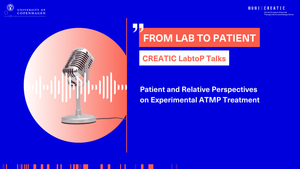 | | | | Patient and Professional Experiences with Experimental ATMP Treatment
| | | | |
| Webinar | June 11, 2026, 14:00–15:00 CET | | | | |
| This webinar focuses on the perspectives of patients and professionals in the context of experimental cancer immune therapy. Patients and professionals often navigate these treatments under conditions of uncertainty, hope, and significant emotional and ethical complexity. This webinar puts lived experience at the center.
The session will be led by CREATIC member Zainab Afshan Sheikh, Assistant Professor, Center for Advanced Studies in Bioscience Innovation Law (CeBIL). The session features guest Mie Seest Dam, Associate Professor, Section for Health Services Research. Mie has years of experience in qualitative research in how personalized medicine is practiced, understood, and negotiated.
While regulatory frameworks and clinical innovation shape access to ATMPs, patients and their families often navigate these treatments under conditions of uncertainty, hope, and significant emotional and ethical complexity. This webinar puts lived experience at the center.
Sign-up here.
| | | | |
| | | | |
|
|
|
|  | | | | Behind every advanced therapy is a patient
journey shaped by hope, uncertainty, and complex treatment decisions. In this section,
we spotlight articles, research, and events exploring patient experiences,
access challenges, and equity in ATMPs.
| | | | |
|
|
| | | | |
| | | | .png) | Perspectives, Expectations, and Concerns of European Patient Advocates on Advanced Therapy Medicinal Products | | | | |
| This paper presents the results of a qualitative study based on semi-structured interviews of 10 expert patient advocates on several different issues around Advanced Therapy Medicinal Products (ATMPs), such as relevance for patients of a discussion on ATMPs, barriers and solutions to improve access, relevance of the collection of long-term follow-up data, equity of access, safety and ethical concerns and more.
Read more here. | | | | |
| | | | |
| | | | .png) | More than a participant in trials of cell and gene therapy: Hearing the voices of people living with neurodegenerative diseases | | | | |
| This chapter of International Review of Neurobiology Volume 166 highlights what has been learnt from the patient voice in their understanding and perspectives of ATMPs and in their experiences of clinical trials in neurodegenerative diseases to date. Here the authors discuss when, and how, including people living with neurodegenerative disease is of value in the development and implementation of ATMPs and the questions this collaborative effort can allow us to answer.
Read the chapter here. | | | | |
| | | | |
|
|
|
| | | | .png) | "I just wanted to speak to someone- and there
was no one…": using Burden of Treatment Theory to understand the impact of a
novel ATMP on early recipients
| |
| | | | With development of novel therapies, that offer ground-breaking
opportunities for treatment, continuing to increase it's important to learn
from the experiences of patients who were among the first recipients of ATMPs.
This study conducted a qualitative investigation informed by the principles of
the key informant technique to capture the experience of some of the first
patients to experience CAR-T therapy in the UK. A directed content analysis was
used to populate a theoretical framework informed by Burden of Treatment Theory
to determine the lessons that can be learnt in supporting their care, support,
and ongoing self-management.
Read more here. | | | | |
| | |
| | | | .png) | Validation of the FROM-16 in family members of
patients receiving advanced therapy medicinal product (ATMP)
| |
| | | | The use of potentially curative ATMPs is limited
due to their high cost and the low number of eligible patients. Using the
FROM-16 to collect the impact on family of disease and treatment in ATMP
patients may demonstrate additional value created by an ATMP intervention and
strengthen the case for its use. This study examines the use of the FROM-16 as a tool for
measuring family impact as part of value estimation in ATMP patients by
recruiting family members of patients attending ATMP-provider clinics in the Midlands
& Wales Advanced Therapy Treatment Centre (MW-ATTC).
Read more here. | | | | |
| | | | |
| | | | .png) | New blog: Equity, access and patient
involvement in advanced therapies
| |
| | | | Read the latest blog by Laurence Woollard,
Director of On The Pulse Consultancy and Co-Chair of ATMP Engage, published for
Rare Disease Day. In the blog, he reflects on how advanced therapies are being
introduced within the NHS, using haemophilia as a case study to explore equity,
benefit-risk considerations, and the need for a Patient Charter.
Read the blog here.
You can also revisit Laurence Woollard's Rare
Disease Day 2022 blog, Moving Beyond Box-Ticking and Lip Service: Why
Patient Involvement Matters in a New Era of ATMPs for Rare Diseases, which
explores the importance of meaningful patient involvement in ATMP development
and access.
Read the blog from 2022 here.
| | | | |
| | | | |
|
|
| |
| | | | .png) | | | | European Health & Pharmaceutical Law Review, Volume 9 (2026), Issue 1, Pages 32 - 43 | | | | |
| Care or Innovation? Studying the
Implementation of the Hospital Exemption in Denmark
| | | | |
| Variation in the use of the hospital exemption for
ATMPs across EU Member States is often framed as a matter of legal
interpretation. In this article the authors suggest that these differences
are not merely about technical interpretation but closely related to how
countries balance concerns for patient access, patient safety, and medical
innovation. How should these values be prioritised? Therefore, if harmonisation attempts are to succeed,
they must consider the values they seek to align. Otherwise, such efforts may
generate new political tensions rather than resolve existing ones.
Drawing on a
case study from Denmark and insights from stakeholders working with ATMPs in
several EU countries, this article analyses the Danish implementation of the
hospital exemption and situates it in a broader European context.
Read the article here. | | | | |
| | | | |
| | | | .png) | | | | International Journal of Pharmaceutics: XVolume 11, June 2026, 100526
| | | | |
| A decade of innovation in healthcare:
Automation, bio-printing and digital twin technologies for personalized
therapies
| | | | |
| ATMPs face a distinct manufacturing challenge:
delivering patient-specific therapies with reproducible quality, acceptable
cost, and GMP-compliant manufacturing control. This narrative review examines how, over the past decade, the
manufacturing of these therapies has moved from operator-dependent, open
workflows toward more automated, closed or functionally closed, and
increasingly data-supported process architectures. Three converging
technology streams are discussed: (i) closed and semi-closed automated
platforms for GMP-compliant cell manufacturing, (ii) advanced bioprinting and
3D manufacturing systems for tissue-engineered products, and (iii) digital twin
concepts and related data-driven strategies as emerging enabling layers for
monitoring, traceability, and process support.
Read more here. | | | | |
| | | | |
|
|
|
| | | |  | | | | Front. Pharmacol. Volume 16, 12 March 2026
| | | | |
| Addressing clinical uncertainties in ATMP
reimbursement: a review of methodological guidelines and European practice
| |
| | | | Advanced Therapy Medicinal Products (ATMPs)
often present substantial clinical uncertainties at the time of reimbursement
evaluation, particularly due to the lack of appropriate comparators and the
absence of long-term clinical endpoints. This study primarily examined two
methodological areas relevant to these challenges: indirect treatment
comparisons (ITCs) and surrogate endpoints. In addition, the review was
supplemented with an assessment of innovative trial designs to explore how
emerging approaches may contribute to evidence generation for ATMPs.
Read more here. | | | | |
| | |
| | | | .png) | | | | Health Econ Review, Volume 16, article number 47, (2026) | | | | |
| The complex price setting and reimbursement of
non-industrial advanced therapy medicinal products
| |
| | | | Advanced Therapy Medicinal Products (ATMPs) developed under the
Hospital Exemption (HE) offer innovative treatments for patients with unmet
medical needs, but their pricing and reimbursement (P&R) remain fragmented
and poorly understood. This paper examines the P&R landscape for HE-ATMPs
developed by academic developers in Spain, based on the Spanish costing
guideline and extends the analysis to HE-ATMPs developed by academic and
non-profit developers across Europe.
Read more here. | | | | |
| | | | |
| | | | .png) | | | | Orphanet Journal of Rare Diseases (2026) | | | | |
| Increasing access to CAR-T therapy: a case
study of an academic hospital's alternative innovation model
| |
| | | | Increasing costs of drugs for rare diseases
have raised concerns about health systems' sustainability and equitable access
to these therapies. Newer and highly effective orphan drugs, such as Chimeric
Antigen Receptor T-Cell (CAR-T) therapies, highlight the need for alternative
innovation models that can offer greater affordability and accessibility. This
case study examines Hospital Clínic Barcelona's (HCB) alternative innovation
model to develop ARI-0001 (varnimcabtagene autoleucel), a novel CAR-T therapy
for certain forms of leukemia, at a price two-thirds lower than comparable
therapies from the pharmaceutical industry.
Read more here. | | | | |
| | | | |
|
|
| |
|  | CREATIC receives first ever
hospital exemption in the Czech Republic
| |
| | | | The CREATIC Centre of
Excellence at Masaryk University's Faculty of Medicine has opened new
facilities in one of the buildings at the Bohunice University Campus, offering
hope to patients with rare and serious diseases. While this is a big milestone
for the project, in March 2026 CREATIC also became the first
organisation in the Czech Republic to obtain a hospital exemption for
therapies for paediatric cancer patients.
"Although we are now opening new premises, we have
several years of experience in the development and manufacture of medicinal
products. In March of this year, we became the first organisation in the Czech
Republic to obtain a hospital exemption for our cell-based medicinal
product. We are now administering this product to paediatric patients with the
most severe and aggressive solid tumours, which carry a high risk of
disease recurrence," said Regina Demlová,
director of CREATIC, outlining the Centre's achievements to date. She
added that, although similar centres are becoming more common, particularly in
Western Europe, CREATIC is relatively unique in Central and Eastern Europe.
Specifically, CREATIC has obtained a hospital
exemption for therapies for paediatric cancer patients, which are developed by
first obtaining tumour samples from a specific patient. Once the patient
has been treated and is in sufficiently good condition, their immune cells are
collected. From these, so-called dendritic cells are obtained, which are then
exposed to the patient's tumour cells. If they pass quality and efficacy
controls, they are administered to the patient in several doses to stimulate
their immune system to fight the tumour. "We have been working on this
anti-tumour therapy for several years and it has already undergone clinical
evaluation. This is one of the reasons we have managed to obtain
a hospital exemption that will allow us to administer it to patients,"
said Lenka Zdražilová Dubská, who is in charge of the Centre's production
facilities.
This MyDendrix cellular anti-tumour therapy will
gradually begin to be produced at CREATIC for specific patients. Regina Demlová
estimates that, in a year's time, around twenty patients will be suitable
for this treatment. The safety and efficacy of the therapy will, of course,
continue to be monitored.
The Centre's importance extends beyond its
technological infrastructure. CREATIC systematically refines the concept of
responsible development of modern therapies, which includes an emphasis on the
accessibility of treatment, transparent communication with patients, and the
long-term sustainability of healthcare innovations.
Read more here. | | | | |
|
|
| | | | |
| | | | | This newsletter is curated by the CREATIC project, views and opinions expressed in this newsletter are those of the author(s) only and do not necessarily reflect those of the European Union or European Research Executive Agency. Neither the European Union nor the granting authority can be held responsible for them. | | | | |
|
|
| | | | |
| |
|
|
|